
As an Amazon Associate we earn from qualifying purchases.
You wash your hair, reach for your usual brush, and notice a little gray collar around almost every bristle. Pulling out the loose hair helps, but it doesn’t quite finish the job. The next question is less obvious: can this brush go in the sink?
The best way to clean a hairbrush depends on its construction. A washable plastic detangler, a wooden paddle brush, and a plug-in styling brush need different treatment. Start by identifying yours, then choose the gentlest method its care instructions allow.
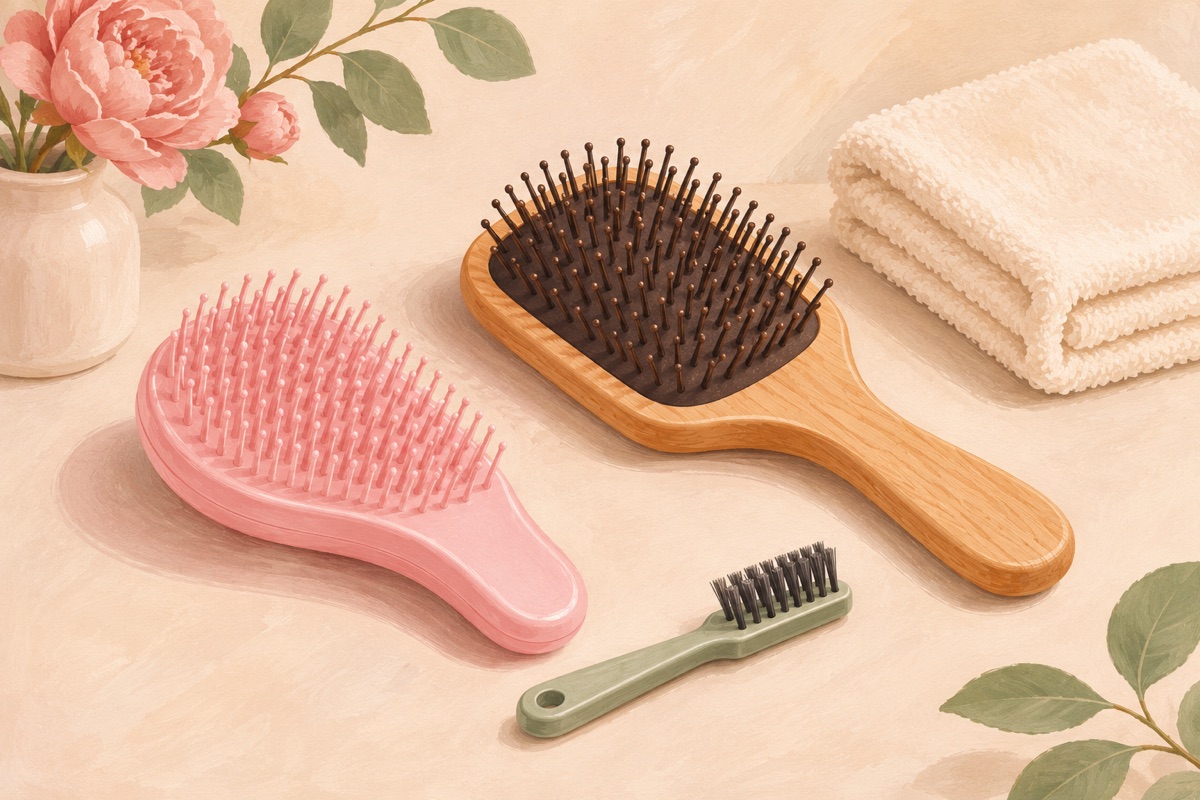
First, check what your brush is made of
Turn it over and look at the handle, base, and bristles. A plastic handle doesn’t necessarily mean the whole brush is waterproof: there may be a hollow body or a cushioned pad underneath.
| Brush type | Where to start | What to avoid |
|---|---|---|
| Washable plastic brush | Remove hair, then gently clean between the teeth | Assuming every plastic model can be soaked |
| Wooden or cushioned paddle brush | Dry removal first; use minimal moisture if permitted | Submerging the handle or cushion |
| Boar-bristle or mixed-bristle brush | Use its recommended cleaning brush and care method | Applying a generic shampoo bath to a specialist brush |
| Electric hot-air brush | Unplug, cool completely, and follow the appliance manual | Immersing it or letting water enter the housing |
For a washable plastic brush: work between the teeth
Gather a clean soft toothbrush, a little warm water, the cleanser your brush maker recommends, and somewhere to leave the brush while it dries. You don’t need to buy a new set of cleaning tools before you begin.
- Lift out loose hair. Use your fingers or a suitable brush-cleaning tool. Work in small sections instead of pulling against a whole tangled mat.
- Clean the base as well as the teeth. Dip the toothbrush into your cleaning solution and gently work through the spaces where residue collects.
- Remove the cleanser as directed. Rinse only if your model’s instructions permit it. If the body is hollow or its care requirements are unclear, check with the brand before putting it under running water.
- Allow it to dry fully. Follow the recommended position and drying method rather than reaching automatically for a hair dryer.
For example, Tangle Teezer’s cleaning guide uses warm soapy water and a toothbrush for several models, but its drying instructions vary by product. That’s a good reason to look up your particular brush.
For wooden and cushioned brushes: keep water under control
Don’t leave a wooden brush floating in the basin. Water can damage the wood, while a cushioned brush can trap moisture beneath its pad. Good Housekeeping’s care guide specifically advises against soaking either type.
Remove hair while the brush is dry. For any remaining residue, use the limited-moisture method specified by the manufacturer. When you can’t find instructions, pause before wet-cleaning an expensive or sentimental brush. A quick photo of its model name can make contacting the maker much easier.
For natural bristles: follow the brush maker’s routine
Boar-bristle brushes deserve their own care check. Don’t assume the cleanser you use on a plastic detangler is also suitable for natural bristles and a rubber cushion.
Mason Pearson’s official Japanese care instructions, for instance, emphasize gentle dry cleaning. For heavier cleaning, they describe applying the cleaning solution with a separate cleaning brush, removing it with that rinsed brush, and avoiding direct immersion. They also warn against hot water and heated drying.
The useful lesson is the method: clean the bristles deliberately without flooding the whole brush. Follow your own model’s directions for cleanser, rinsing, and drying rather than mixing advice intended for different products.
What about an electric hot-air brush?
Treat it as an electrical appliance. Switch it off, unplug it, and let it cool completely. Remove caught hair gently, then follow the manual for the barrel, bristles, and air intake. Never immerse the appliance. A removable attachment isn’t automatically washable.
Allure’s stylist interviews on cleaning hair tools also emphasize unplugging hot tools and keeping them out of water. If you’re comparing tool types, our hot-air brush guide explains the styling category.
Make the next clean easier
Try a simple check when you put your brush away: is there loose hair to remove, visible residue to address, or damage to inspect? A quick look gives you something more useful than waiting for a particular date while buildup keeps accumulating.
Keep the care instructions with your other beauty-tool manuals, or save the manufacturer’s page on your phone. If you own several brushes, label the saved pages by model. That small bit of organization prevents the same “can I wash this?” question next time.
A practical routine is one you’ll remember: remove caught hair regularly, check the base, and clean according to the brush’s materials. Once it’s fully dry and ready to use, you can get back to the enjoyable part—styling. Our blow-drying tips are a good next read.
Amazon and the Amazon logo are trademarks of Amazon.com, Inc, or its affiliates.